

The transition to electric heavy goods vehicles is accelerating and driving major change across the charging landscape. At the centre of this shift is the emergence of a new model that’s completely changing the game for freight operators, redefining the commercial opportunity.
Step forward the Depot Point Operator (DPO) model.
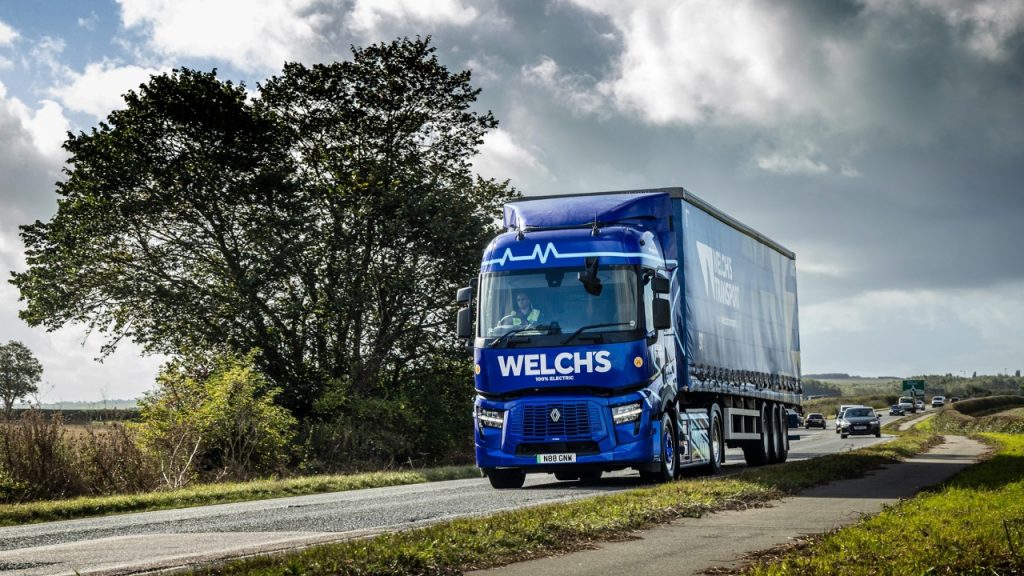
Charging up new opportunities
While public charging networks are built around opportunistic, short‑stay usage, freight operates on completely different principles, with eHGVs needing predictable, high‑throughput charging aligned to tightly managed logistics schedules.
For commercial vehicle fleets, depots already sit at the centre of their operations. A significant number of fleets operate on a back-to-base model, where vehicles return to depot, dwell for long periods and follow repeatable patterns that make energy demand far more forecastable for eHGVs.
What we are seeing is a shift towards a new Depot Point Operator (DPO) model. One where depots and truck stops anchor utilisation, serving their own fleets first and then (if they choose) opening up surplus capacity to electric van fleets and other operators. Staying in control of how much third-party charging they offer, and who they offer it to, based on their operational needs.
With commercial fleet depots typically being situated within busy logistics hubs, they are ideally placed to offer supplementary or top-up charging to approved local fleets and vehicles operating on active routes under pre-arranged agreements.
This is exactly the model that Voltempo, our infrastructure solutions, and charge point technology, are designed to support and enable – and why we are so unique.
Strategic routes, smart energy procurement, operational data
We are building depot-led networks on strategic routes, combining charging with smart energy procurement and rich operational data, and bringing access to eLCV fleets where local demand already exists.
Linking depots across the Strategic Road Network in this way also accelerates eHGV adoption. Fleets can charge at base and when out on delivery, use other depots in the network at lower cost, giving operators confidence to electrify longer routes and scale faster.
And the growth of such networks is accelerating. For example, Voltempo, is lead partner of eFREIGHT 2030, a UK government‑funded programme, being delivered in partnership with Innovate UK. It brings together fleets, manufacturers, technology partners and policymakers, who are working together to build the UK’s largest truck charging network, powered by Voltempo’s HyperCharger and technology.
The consortium is establishing 37 depot charging hubs across the UK, scaling to hundreds more by the early 2030s, while accelerating the rollout of 100 electric HGVs into service. Proving that electrification of logistics is not only possible, but commercially viable and scalable.
Benefits of this approach
Our approach creates clear win-wins:
- Customers gain optional new revenue streams, lower energy costs and faster electrification.
- Investors benefit from quicker, more predictable capex payback.
- Voltempo builds a scalable, profitable infrastructure platform.
We use data to deploy capital precisely, prepare grid upgrades early and avoid stranded assets. Our energy strategy mitigates standing charges and accesses lower-cost power.
We also give site owners real funding choice: customer-funded capex, Voltempo-funded Depot Charging-as-a-Service, or long-term leases with predictable rental income.
And we are proud to support UK jobs, with our charging systems designed and built in Britain.
On the road to decarbonising transport
As the UK accelerates toward a decarbonised freight system, high‑throughput depot charging, driven by DPOs, will be a vital piece in the puzzle, aiding large‑scale eHGV adoption and helping deliver long term commercial-viability.
If you are a depot or truck stop owner exploring electrification, my team and I would love to speak with you in more detail about the topics raised here.